The cabinet was staying
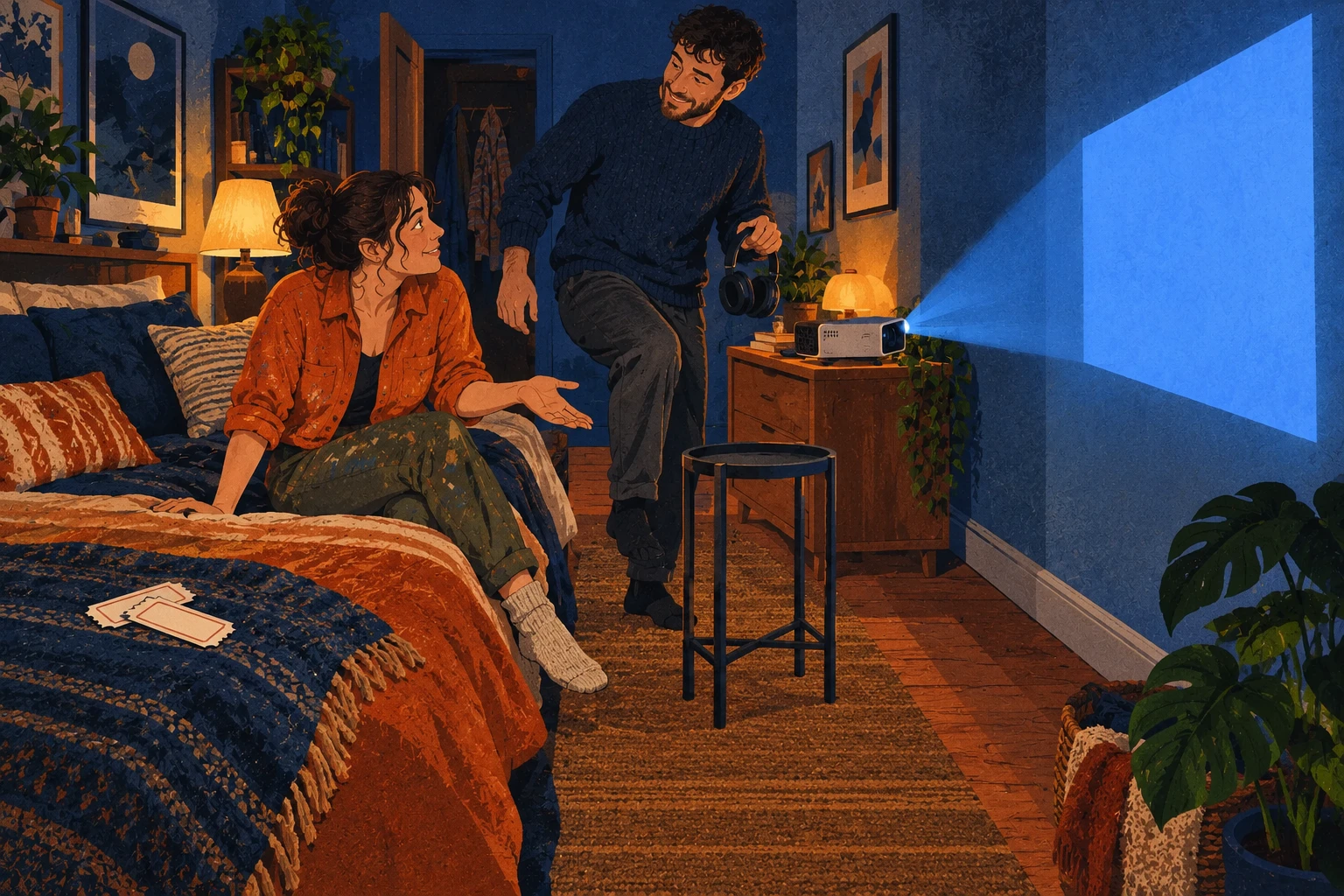
Sloane had repaired the bedside cabinet herself. One drawer still needed a lift before it would close, which she considered a small price for proper wood. On Saturday nights, she wanted an old film on the bedroom wall and somewhere within reach to put her tea. The BenQ GV50 could go beside the lamp.
Milo had a more ambitious plan. If they could use it for his Thursday racing games with his brother, the monitor could leave his desk. He edited audio there all week. A little less equipment was an appealing way to sell Sloane some more equipment.
She measured the cabinet. He found BenQ’s 22.4 ms gaming figure. Then she looked from the cabinet to the patch of wall above the foot of the bed. Facing straight ahead, the projector would point beside their chosen picture area. To reach it, they would have to turn the projector toward the middle of the room.
The setting they needed switched the other one off
Sloane knew the sort of lopsided rectangle that came from aiming at a wall sideways. She was counting on keystone correction to straighten it. Milo opened the BenQ gaming guidance to check what happened in the mode he wanted.
The quoted figure belonged to Game Boost at 1080p and 60 Hz, using an HDMI or USB-C source. Selecting it reset image corrections and made them unavailable. BenQ recommended putting the projector directly in front of the screen. The cabinet plan depended on a setting that his gaming plan would turn off.
That still left the possibility of playing with correction enabled in another mode. BenQ says keystone adds input lag, but gives no number for that setup. They could not tell from the page how Milo’s racing games would feel. Sloane’s puzzle games, regularly paused for a conversation, gave her less reason to worry about the figure. Milo wanted it settled before giving up the monitor.
He suggested a stand at the foot of the bed. Sloane went to fetch the tape.
Then Sloane opened the wardrobe
At the theater, Sloane taped out scenery before anyone built it. At home, a few strips on the wall would do. They marked the 100-inch picture they had been imagining and worked backward from the GV50’s specifications.
For its native 16:9 shape, a 100-inch diagonal works out at about 87.2 inches wide. Multiply that width by the 1.2 throw ratio and the lens belongs roughly 104.6 inches from the wall, about 8.7 feet. It is a starting distance for an uncorrected image. Picture height, space for the projector and its cable, and installation tolerances still need checking.
Sloane marked the proposed stand position. Then she opened the wardrobe. The door swept across the tape. Moving the stand into the remaining gap would put it in her route out of bed on rehearsal mornings. Milo offered to move it after each game. She pointed to the microphone stand he had made the same offer about.
If the GV50 can put the picture where you want it without correction, you can use BenQ’s quoted gaming mode. Use HDMI or USB-C at 1080p and 60 Hz, then select Game Boost. The picture position and height matter as much as the floor distance. A side table can work when it suits that uncorrected picture. Sloane’s cabinet did not.
Thursday’s game stayed at the desk
They could have chosen a smaller picture and started the room plan again. Neither wanted a smaller picture enough to do that tonight. The whole attraction had been a bedroom cinema that could also clear Milo’s desk, and the room had run out of places they both wanted to put it.
They left the GV50 unordered. Milo kept the monitor for Thursday. A projector for films could wait until they were ready to pay for that use alone, without counting the gaming display it was supposed to replace.
If films are your only reason for buying, this gaming-mode restriction may change very little. If responsive gaming is part of the justification, settle the placement first. Keep a display you already like if the projector cannot use that gaming mode from the place you want to put it.
Sloane peeled the tape off the floor. The outline on the wall could stay until Saturday. It was a useful size to think about, and it did not stop the wardrobe opening.
The practical fix
- Mark the picture you actually want and a position that can face it without image correction.
- For a native 100-inch picture, start around 8.7 feet from lens to wall. Check picture height, body and cable space, doors and walking routes separately.
- If the picture works without correction, GV50 supports the quoted 22.4 ms gaming condition at 1080p/60 Hz through HDMI or USB-C in Game Boost. Choose it on that basis only if this input, picture size and position suit your room.
- If your only acceptable position needs correction, assess gaming in that mode separately before buying. Keep a suitable display you already own in the meantime. The quoted figure cannot answer for corrected-mode play.
This applies if…
- You are buying the GV50 partly for its advertised low-lag mode.
- Your intended picture needs correction from the only position you want to use.
The answer changes if…
- You can make room for the required uncorrected picture, including its height and clearance.
- You have assessed gaming with correction separately and are happy with it.
- You want a film projector and the advertised gaming figure does not influence the purchase.
The source notes
- How do you enjoy a better Nintendo Switch gaming experience with the GV50 Portable Projector?BenQ US · FAQ answer and notes, applicable model GV50 · Checked 2026-10-04
- If I enable keystone correction, will input lag be impacted?BenQ US · FAQ answer, applicable model GV50 · Checked 2026-10-04
- GV50 SpecificationsBenQ US · Display, Optical, Compatibility and Dimensions · Checked 2026-10-04
What to check in your own setup
- BenQ also lists HDR Game Boost among the modes that reset image corrections. Neither FAQ supplies a corrected-mode latency measurement.
- The distance is calculated from BenQ’s stated optics. It does not establish picture height, installation clearance or measured game response.
- Exact GV50 model, HDMI or USB-C input, 1080p at 60 Hz and the documented Boost mode.
- The intended image must work without correction at a position everyone can use.
Spotted something that needs a second look? Leave a correction for this story.